POLSAM | POLİTİK STRATEJİLER ARAŞTIRMA MERKEZİ

POLSAM Board Member Responsible for Foreign Policy
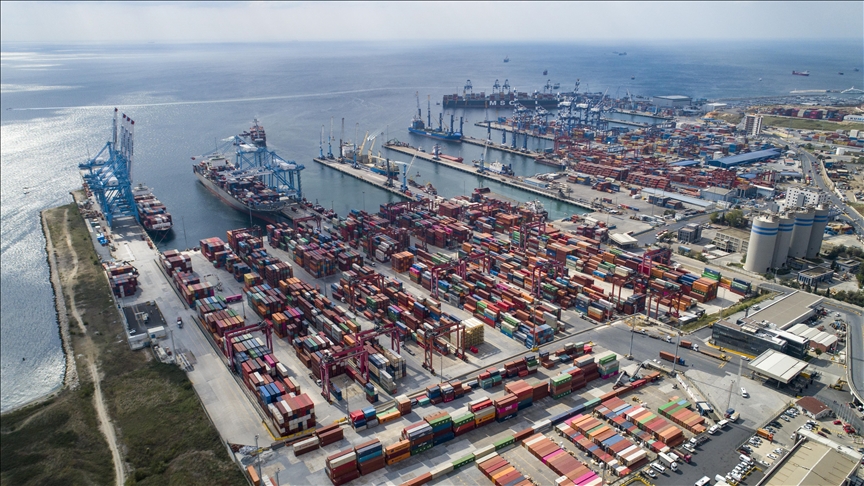
According to Anadolu Agency data, Türkiye’s exports increased by 1.6 percent in February 2026, exceeding $21 billion, indicating a remarkable performance during a period of intensified global conflicts and geopolitical upheavals. However, the higher rate of increase in imports and the widening of the foreign trade deficit during the same period necessitate a more in-depth analysis of the multifaceted effects of the global war environment on the Turkish economy. The current situation should be read not only as a one-month trade data point, but also in the context of the economic repercussions of power struggles in the global system.
Today, the world economy is grappling with supply chain restructuring on the one hand, and facing uncertainties created by hot conflicts on the other. In particular, the Russia-Ukraine War has fundamentally changed Europe’s energy security architecture. While European Union (EU) countries are trying to reduce their dependence on Russian energy sources, they are seeking alternative supply channels, and this situation causes periodic jumps in energy prices. As an energy importing country, Türkiye directly feels every increase in oil and natural gas prices. Rising energy costs are reflected not only in electricity bills but also in production costs, transportation expenses, and final export prices. This chain reaction can challenge the competitiveness of Turkish firms, especially those operating in energy-intensive sectors. However, an examination of Türkiye’s export structure reveals a strong dependence on the European market. Germany, the UK, and the US appear to be Türkiye’s primary export destinations. The slowdown in the European economy due to the war, the contraction in consumer demand, and the decline in industrial production could limit Türkiye’s external demand performance. If the recessionary trend in Europe strengthens, Türkiye’s export growth could lose momentum. Therefore, market diversification has become a strategic necessity, not just a preference. Conflicts in the Middle East also constitute a separate risk area. The Israeli-Palestinian conflict and security issues in the Red Sea region affect some of the most important transit points for global maritime trade. A potential crisis around the Strait of Hormuz, which is critical for energy supply, could cause sudden and sharp increases in oil prices. In such a scenario, Türkiye’s energy import bill could rise rapidly. This can push both inflation and the current account deficit upwards. Therefore, the economic impact of wars is often felt not directly, but through the cost channel.
On the other hand, not all consequences of a war environment are negative. Increased global security spending creates new opportunities for defense industry manufacturers. Türkiye has achieved significant export successes in the defense and aerospace sector in recent years. The increasing global demand for defense can increase the share of high value-added product exports. This situation can contribute to the evolution of Türkiye’s export composition into a more technology-intensive and sustainable structure. However, for this opportunity to become a lasting gain, it depends on the continuity of R&D investments and the strengthening of institutional capacity.
The financial dimension should also not be ignored. During periods of global conflict, investors generally turn to safe-haven assets. This tendency can create volatility in the currencies of developing countries. Given Türkiye’s structural dependence on imported intermediate goods, exchange rate depreciation does not automatically translate into sustained export competitiveness.
Overall, Türkiye’s current export performance shows a certain resilience despite the global war environment. However, it is not possible to say that this resilience is not fragile. Energy dependence, high dependence on European demand, and global financial fluctuations make the Turkish economy vulnerable to external shocks. In contrast, market diversification, strengthening energy supply security, increasing renewable energy investments, and focusing on high value-added sectors can enable Türkiye to gain an advantage in this era of uncertainty. Ultimately, the ongoing wars present both risks and opportunities for Türkiye. While cost pressures and demand contraction will be prominent in the short term, strategic adaptation capacity will be decisive in the medium and long term. In this period of reshaping of power balances in the global system, economic resilience depends not only on numbers but also on a flexible, diversified, and technology-based production structure. The fundamental question facing Türkiye is whether it will manage this period of uncertainty with a defensive reflex or with a transformative vision.
Photograph: Anadolu Agency